Sam Menzin skis, runs, cooks, and plays chess away from his work in baseball and sports investing. Here he writes about what the mountain teaches about judging risk when conditions keep changing.
Every ski run starts with a decision made at the top of the hill. Before you push off, you have already chosen a trail, a line, and a speed, usually based on a sign, a quick look at the snow, and what you know about your own legs that day. Then the mountain tells you, within a few seconds, whether you chose well. I have written before about what distance running taught me about planning, where the feedback takes months. Skiing is the opposite. The feedback is immediate, and that makes it one of the clearest lessons in risk I know.
My work has always involved risk. In a baseball front office, it was deciding which players to acquire, how much to pay them, and how to weigh a medical report against a scouting report. In sports investing, it is deciding whether a facility or a business is worth the price. Skiing puts that same judgment into a form your body understands right away.
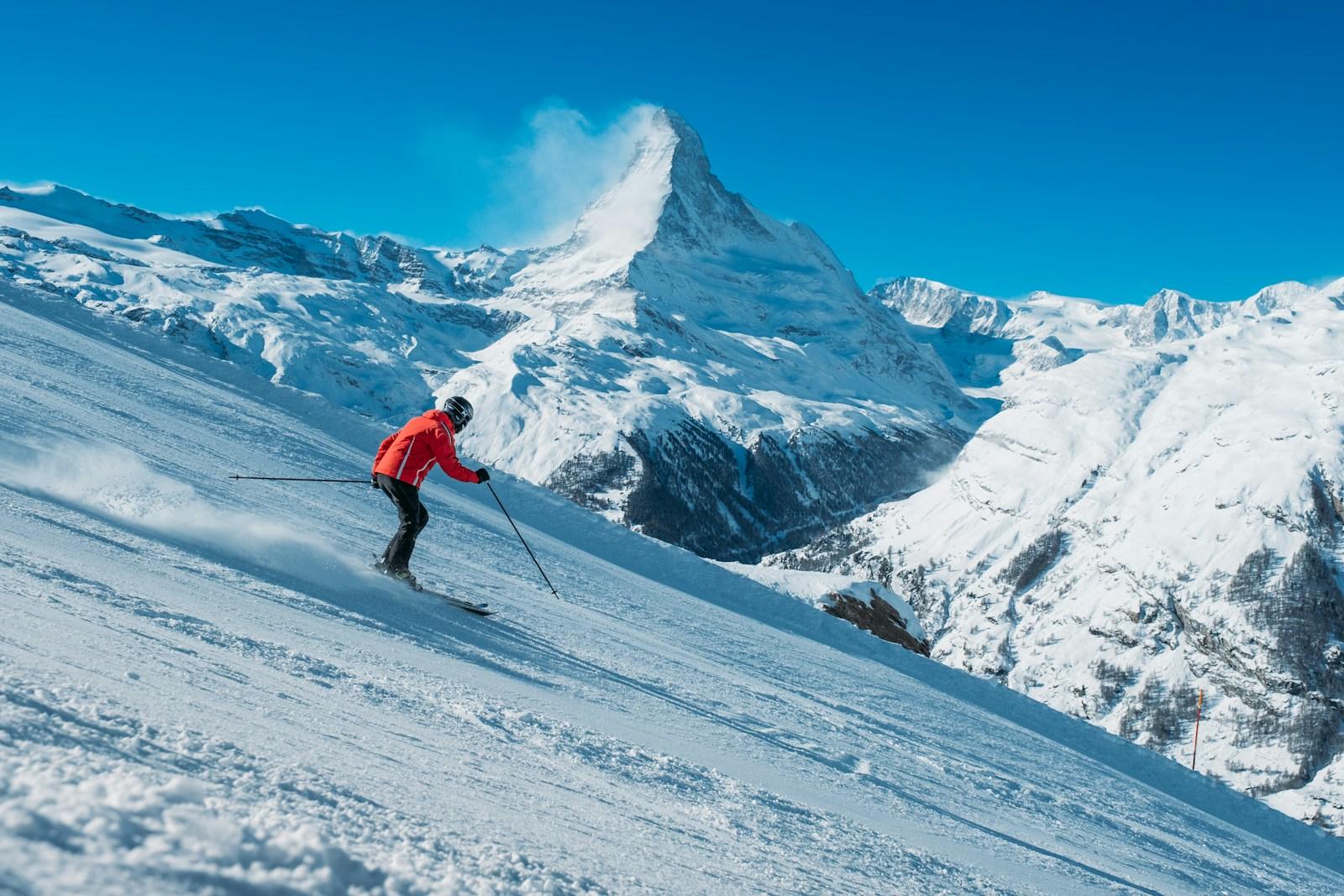 Image source: Unsplash
A Rating Only Means Something Inside Its Own System
In the United States, ski trails are marked with green circles, blue squares, and black diamonds. Most people treat those symbols as a universal standard. They are not. Each mountain rates its own trails relative to its own terrain, so a blue square at one resort can ski like a black diamond at another.
That lesson applies almost everywhere. A scouting grade means something specific inside the organization that issued it. A “strong” rating from one analyst can be an ordinary one from another. A facility described as “best in region” depends entirely on what else is in the region. Before trusting any rating, I want to know who assigned it and what it was being compared to. The symbol is the start of the evaluation, not the end of it.
Conditions Change Faster Than the Map
The same trail can ski completely differently from one hour to the next. Fresh snow in the morning can be ice by the afternoon. Flat light can wash out the terrain so you cannot see the bumps. Your legs at three o’clock are not the legs you had at nine.
The trail map describes the run on an average day. You are skiing it today. Good skiers adjust constantly, reading the snow a few turns ahead instead of relying on what they knew from the last run.
Business decisions work the same way. A valuation, a scouting report, or a market study describes conditions at the moment it was written. By the time you act on it, something has usually shifted. Front offices are always committing before the picture is complete, and the skill is not waiting for perfect information. It is noticing when conditions change and adjusting before it costs you.
Always Stay in Control
The National Ski Areas Association publishes a set of rules called Your Responsibility Code, and the first item is the one that matters most: “Always stay in control. You must be able to stop or avoid people or objects.”
That rule is useful because it defines control in practical terms. Control is not about how fast you are going. It is about whether you can stop or change direction when something unexpected appears. A skier going moderately fast with plenty of room to stop is in control. A skier going slowly on terrain beyond their ability may not be.
Overconfidence usually shows up here. A few good runs can make a harder trail look manageable, and a skier who has been in control all morning may start treating that as a permanent condition instead of a result of the terrain they picked. The same thing happens after a few successful deals or a strong season. Past results describe the conditions you handled. They do not guarantee you can handle the next ones, especially when the stakes are higher.
The business version is about commitments you cannot undo. Taking on debt, signing a long contract, or locking into a building schedule all reduce your ability to stop. None of those are bad decisions on their own. The question is whether you have kept enough room to change course if the conditions ahead turn out to be different from what you expected.
The People Downhill Come First
The second item in the code is that people ahead of you or downhill from you have the right of way, and it is your job to avoid them. They cannot see you coming. You can see them.
Leaders are always uphill from someone. The decisions I made in a front office affected scouts, trainers, players, and their families, most of whom had no say in those decisions and often could not see them coming. The same is true now when I work with families on college recruiting, helping them weigh recruiting decisions that will shape a young player’s next four years. The person making the decision carries the responsibility for the people it affects.
Closed Trails Are Closed for a Reason
Another item in the code is simple: keep off closed trails and out of closed areas. Ski patrol closes terrain based on information most skiers do not have, such as avalanche risk, hidden obstacles, or thin cover. From the top, a closed run can look perfectly fine.
The same principle applies whenever someone with specialized knowledge raises a concern. In baseball, it was usually the medical staff flagging a risk the scouting reports did not show. In investing, it might be an engineer, a lawyer, or an operator pointing out a problem that does not appear in the financial model. When the person with the best information says no, the burden of proof belongs on the person who wants to go anyway.
Knowing When to Take the Easier Way Down
Every skier eventually stands at the top of a run and realizes it is more than they want to take on that day. Maybe the snow has turned. Maybe they are tired. The right choice is often to take the easier trail down, and there is no shame in it. You will get another chance tomorrow.
That is one of the hardest things to do in business. Once you have spent time and money evaluating a deal or planning a project, walking away feels like a loss. But the work you have already done is not a reason to keep going. The only question is whether the next step makes sense given what you know now.
The mountain teaches that lesson quickly and clearly. The skiers who last know how to read the conditions, stay in control, and recognize when the easier way down is the right one.
About Sam Menzin
Sam Menzin is a sports executive, entrepreneur, and advisor who spent fourteen years with the Detroit Tigers, rising to Vice President and Assistant General Manager. He founded SJM Sports, where he advises clients on evaluating sports facility investments, and he is the founder and CEO of Campus Edge Baseball. Outside of work, he runs, cooks, skis, and plays chess.